
Sheikh Karama Bajubair: The Quiet Reformer Who Left a Mark on Basilan
Some histories don’t live in textbooks. They live in coastlines, family stories, and the way elders pause before they speak—because what they’re about to share is not just information, but inheritance.
In Basilan, one of those stories is about Sheikh Karama Bajubair—also remembered in Amaloy as Sheikh Karama Bajubair—a name that continues to surface whenever people talk about “the old days,” when Islam was practiced, yes, but often mixed with customs that were slowly corrected over time.
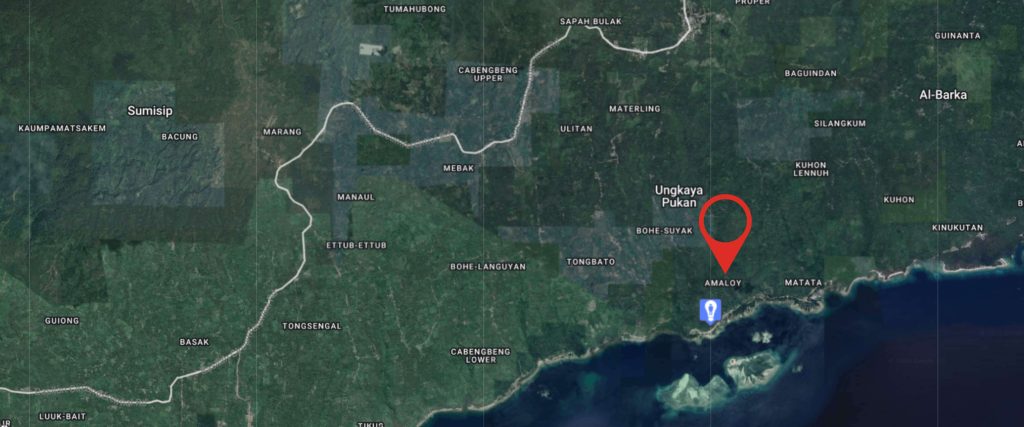
This is not a polished, archive-backed biography. It’s a community memory stitched together from oral testimony in Amaloy, Ungkaya Pukan, and from descendants who have kept the story alive for generations.
And maybe that’s exactly why it matters.
A name carried by the sea
If you stand in Amaloy long enough and listen to people talk about elders, teachers, and the early religious life of the community, you’ll eventually hear it: Sheikh Karama Bajubair.
Locals describe him as a scholar-missionary who arrived with companions—cousins, they say—Arabs who traveled widely across the maritime world of Southeast Asia. In their telling, Sheikh Karama Bajubair came from Hadhramaut, Yemen, part of a wider movement of Hadrami scholars known for traveling across oceans, building kinship ties, and spreading religious learning from port to port.
No one in Amaloy can point to a written record that names his exact birthplace. But the route of his journey—repeated consistently in community accounts—maps a familiar corridor in the region’s Islamic history:
Kuala Lumpur → Sandakan → Simunul (Tawi-Tawi) → Cotabato → Basilan (Amaloy)
That chain matters because it places Basilan where it truly belongs not on the margins of history, but inside a living network—linking Mindanao and the Sulu archipelago to Malaysia, Indonesia, and the wider Muslim world beyond.
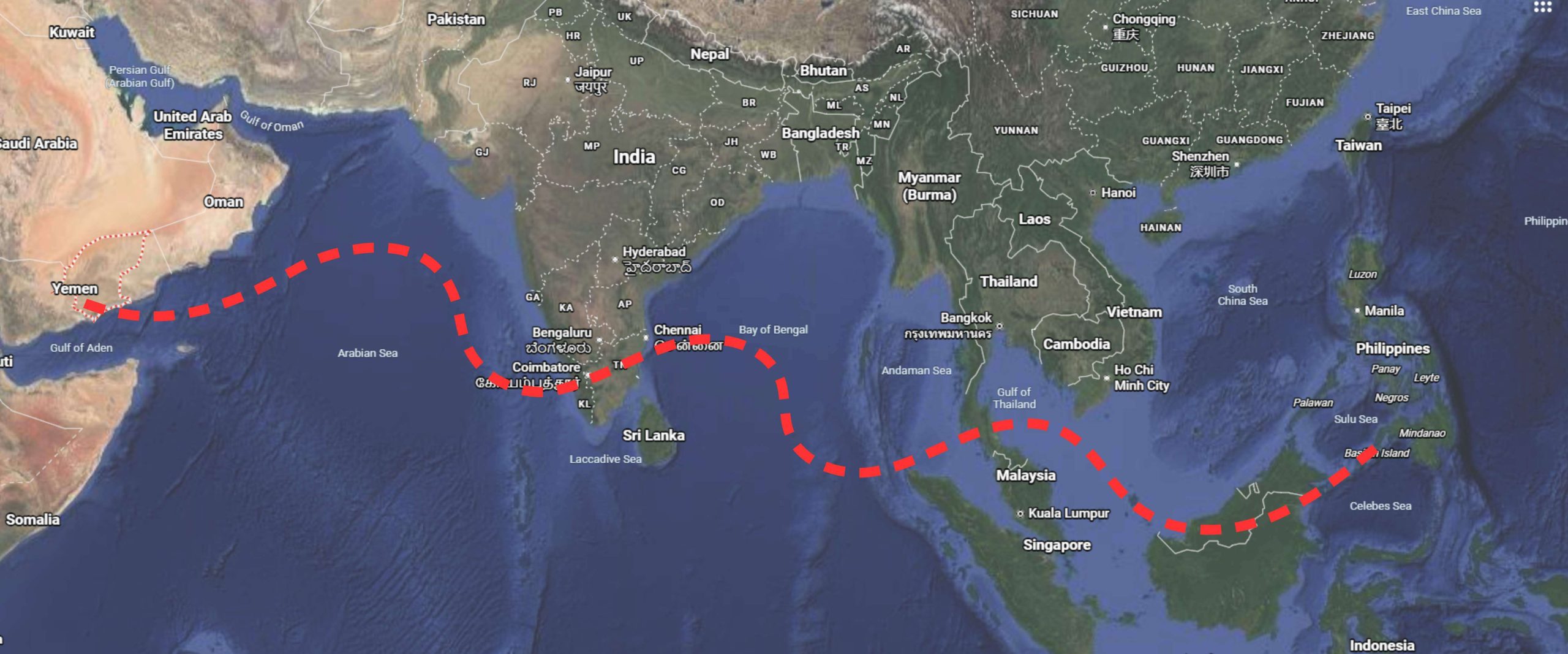
*Note: The route in the image above is only for picture purposes. There might be other routes that Sheikh Karama Bajubair and his cousins/siblings went through, but they are missing in this image.
Sheikh Karama Bajubair Travel with his siblings/cousins.
One of the details elders emphasize is that Sheikh Karama Bajubair was not a solitary traveler. He arrived with a small group of Arab companions—six, maybe more, depending on who tells it—bound together by kinship.
Over time, the group dispersed.
Some accounts name these companions and where they settled:
-
Sheikh Sibasuwan, remembered as later linked to Taluksangay, Zamboanga City
-
Sheikh Mohammad, who returned to Sandakan
-
Sheikh Abubakar, who went to Jolo, Sulu, particularly Tiange
-
Sheikh Abdursabor, whose descendants are said to be in Zamboanga City
-
Two others remembered as having gone to Indonesia, settling in what locals called Kampung Arab
Whether every name and destination can be verified through documents is a task for future researchers—but as oral history, the pattern is striking: the movement looks intentional. The missionaries didn’t concentrate themselves in one place. They spread across strategic communities, maximizing reach through teaching, trade, and kinship.
And wherever they went, the community remembered the core purpose simply:
their mission was about Deen—Islam.
Amaloy before the reform
People in Amaloy say Islam was already present long before Sheikh Karama Bajubair arrived. The community practiced the religion, but in a way that was often blended with older customs.
That blending isn’t unique to Basilan. Across Southeast Asia, many coastal Muslim communities experienced Islam as layered history: religion arriving through trade and contact, then later becoming more standardized through scholars and reformers. In Amaloy’s memory, Sheikh Karama Bajubair represented that later moment—a “straightening,” a return to what people described as correct and orthodox practice.
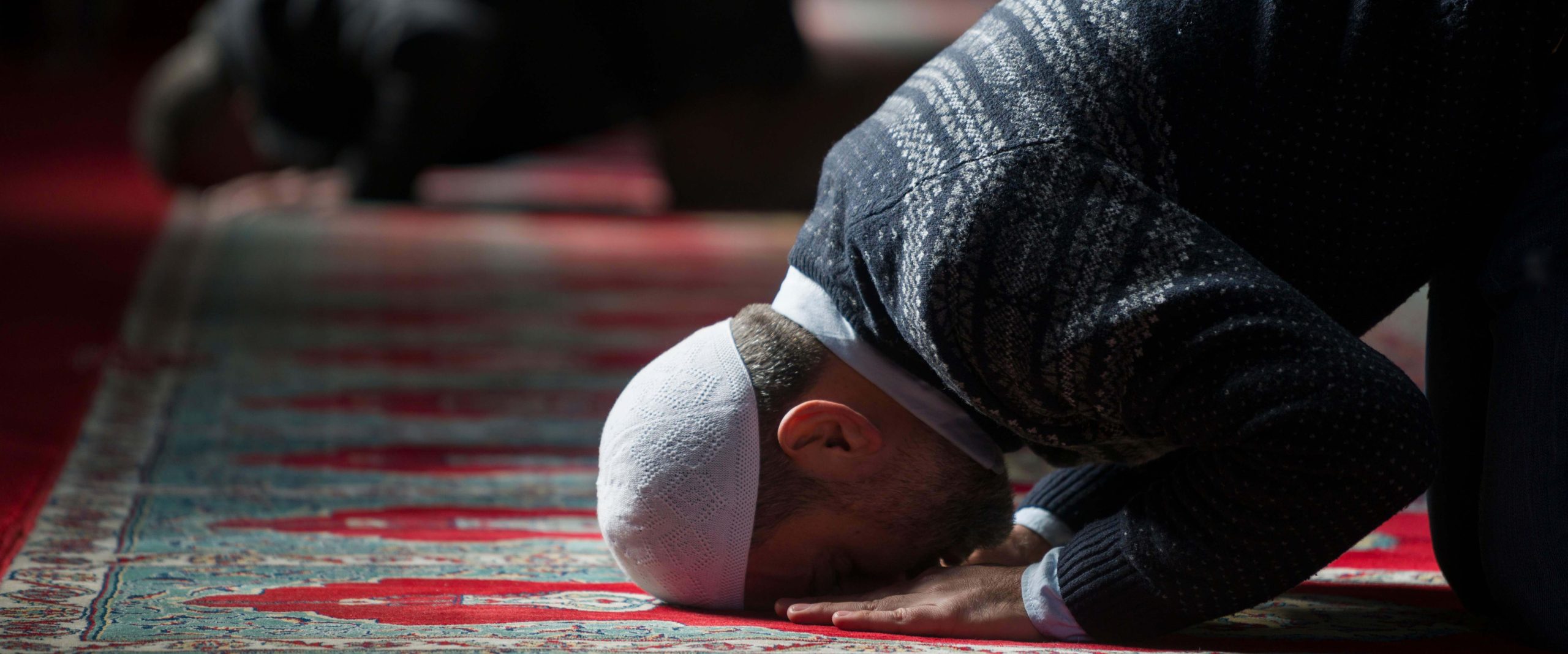
Elders recall specific examples.
They talk about Friday prayer, for instance. Instead of praying two raka’at after the khutbah, locals reportedly prayed four—an additional act they called “Tapil.” They also recall practices like seeking help or protection through sacred places—trees, tombs, mountains—or even jinn.
Sheikh Karama did not come to erase culture. In the story people tell, he came to correct what they believed crossed into innovation (bid‘ah) and major shirk—acts incompatible with Islam’s central teaching of tawhid.
This is why elders remember him not just as a visitor, but as a reformer.
A scholar who had to preach quietly
One of the most surprising parts of the Amaloy narrative is the political atmosphere surrounding preaching during Sheikh Karama’s time. Community accounts insist that openly preaching Islam was restricted—so he taught in ways that protected him and the community:
-
night preaching
-
home visitation
-
small, private gatherings
-
instruction centered in his own home
Even with those limits, people say visitors came from different parts of Basilan to seek guidance. In a place where written history is scarce, that kind of travel—people crossing distance just to sit, listen, and learn—becomes its own evidence of influence.
And then there’s something else the community admits openly: appearance mattered. His Arab lineage and appearance naturally gave him authority. In local memory, “Sheikh” was not only a title of knowledge—it was also a recognition of origin and perceived religious legitimacy.
But what secured his place in Amaloy’s story wasn’t the title. It was impact.
The marriage that anchored the mission
Oral histories often turn on the personal, because personal ties are how communities absorb outsiders.
In Amaloy, the story goes that the community offered the missionaries land and homes. They also formed kinship ties—most notably through Sheikh Karama’s marriage to a woman remembered as Addisin Samsarani, the only daughter among seven siblings.
Her brothers—Irul, Sahisa, Elias, Ali, Taif, and Adjack—became Sheikh Karama’s students. Among them, Adjack stands out in every account: unmarried, deeply devoted, and ultimately the closest disciple.
It’s a small detail with big meaning. Marriage in Southeast Asian maritime communities has long functioned as more than romance—it can be a bridge, a pact, a way to bind a scholar to a place and make his mission a shared community project.
In Amaloy’s narrative, that’s exactly what happened.
A death too early—and a legacy that refused to end
The story then takes a sudden turn.
Sheikh Karama Bajubair, locals say, died early—before his son even reached a few months old. He left behind Addisin and an infant son named Sheikh Ali Samsarani.
If the story ended there, Sheikh Karama would remain only a remembered visitor.
But Amaloy remembers something else: succession.
Not through blood, but through discipleship.
Sheikh Adjack—Addisin’s younger brother and Sheikh Karama’s closest student—took over the work. In the community’s telling, Adjack became Amaloy’s spiritual cornerstone: the person people ran to for teaching, guidance, and questions of religion.
And more importantly: he trained the next generation.
The first “homegrown” scholars
Adjack’s most lasting imprint, according to oral accounts, was training early local Yakan religious leaders. Names are remembered with specificity—an important sign in oral tradition that these individuals were considered foundational:
-
Adjabi (Kabengbeng, Sapa Langay)
-
Jamasali (Kabengbeng, Sapa Langay)
-
Gadjalun (Manicaan)
-
Kalaki (believed from Kabengbeng)
-
Kammang (Kinukutan)
Some narratives even suggest that early leadership roles—like the first mufti figures in Basilan—connect to this early generation.
Whether or not every title can be proven in written archives, the broader meaning is clear: the mission did not remain “Arab knowledge.” It became Basilan knowledge. It was localized, taught, and transmitted within the island.
That is how reform becomes tradition.
The bloodline: descendants as living archives
Sheikh Karama’s only son, Sheikh Ali Samsarani, eventually married Marma Unggah Tahang and had eight children—including descendants who would later become key custodians of this history.
Among those remembered in the family lineage are:
- Bajubair Said
- Sitti Nuril Anwar
- Juraid Karam
- Abdussabor
- Jul-arab
- Sitti Rawda
- Sitti Saada
- An unnamed child who died in early infancy
This matters because in places where records are missing, descendants do not merely inherit blood—they inherit responsibility. They become the caretakers of memory. They are the people who can still say: this is what our elders told us, and this is what our community remembers.
The Cotabato connection: an unfinished thread
Then there is a chapter that Amaloy shares with a mixture of certainty and mystery.
According to family testimony, Sheikh Karama Bajubair revealed on his deathbed that he had a first wife and a daughter in Cotabato. He asked Addisin to find them—so the daughter would not be lost to time and distance.
But the lead was painfully thin: only a family name—Bajubair or Bajunaid—described as an influential Arab family living together in one compound.
This is one reason the keyword Sheikh Karama Bajubair matters: in the oral tradition, “Bajubair” is not only a name—it is a clue.
It also opens a bigger research door: Hadrami networks in Mindanao, kinship corridors across Cotabato, Basilan, Zamboanga, and the Sulu zone. For now, though, this remains a living mystery—one more reminder that oral history often gives you not only answers, but future questions.
When the madrasa arrived: reform becomes institution
Years later, after Adjack’s time, another turning point arrived in Amaloy: the establishment of the madrasa system.
A local leader, Hadji Samad Elias (son of Elias—Addisin’s brother), initiated formal madrasa education and invited an Arab scholar named Sheikh Abdul Fattah Indawi, who was in Zamboanga at the time.
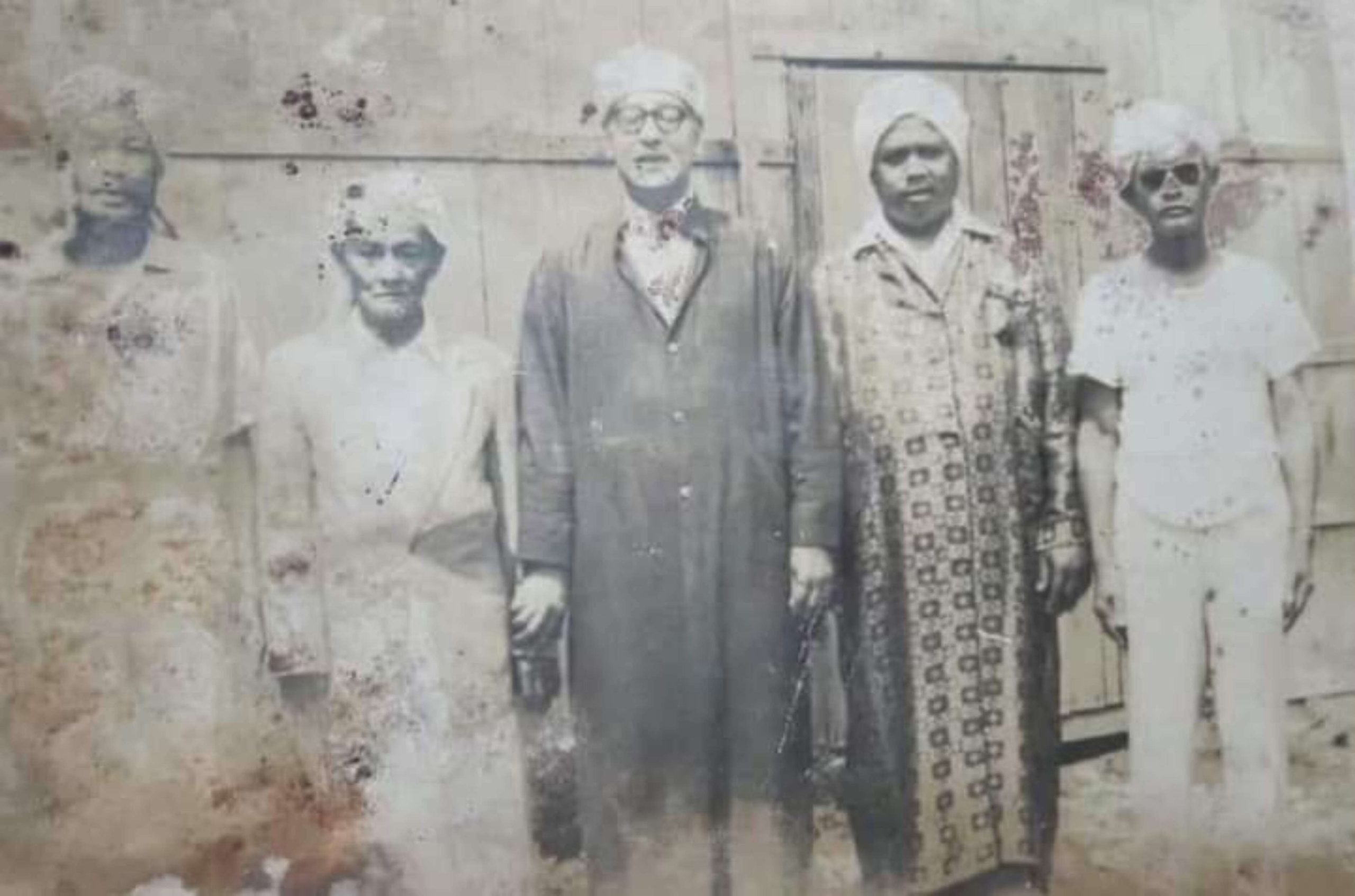
*Note: Sheikh Abdulfattah Indawi & company (Right to Left: Hadji Salih, Hadji Yahsin, Sheikh Abdulfattah Indawi, Hadji Ibrahim, and Hadji Abdullah). The background of the picture is the First Madrasa established in Amaloy.
Community memory preserves the welcome vividly: they carried him on a bamboo chair from the shore to the center of Amaloy, and then to the same house where Sheikh Karama Bajubair once stayed.
The symbolism is unmistakable: the community recognized Arab scholarship as religious legitimacy, and they were ready to institutionalize Islamic learning—moving from home-based reform and oral teaching into organized education.
In a way, Amaloy tells a full story of Islamic development:
correction → discipleship → local scholars → madrasa institution
Martial law and the stolen chest: when heritage becomes a casualty of conflict
Every heritage story in Mindanao eventually intersects with conflict. For Amaloy, one of the most painful memories is tied to martial law in the 1970s–1980s.
According to the descendants, Sheikh Karama’s belongings were once kept in a wooden Baul (chest)—a container that held not only personal items but historical memory:
-
garments
-
his sulban (headwear)
-
a Mushaf (Qur’an)
-
tasbih
-
handwritten kitabs
-
and family treasures including Japanese-era coins and paper currency
During military raids, communities were displaced, homes burned, and fear became normal. The family says they fled to the forest and hid in a cave beneath a river. Their house was looted and set ablaze, and the Baul was allegedly taken.
Years later, a relative reportedly saw what looked like the same Baul in Luuk Bas (Balas), Lamitan, displayed in the home of a prominent family. But fear prevented retrieval.
This is not just a story of a stolen object. It is a story of how violence steals heritage—how memory can be taken, displayed, and never returned.
Yet not everything was lost.
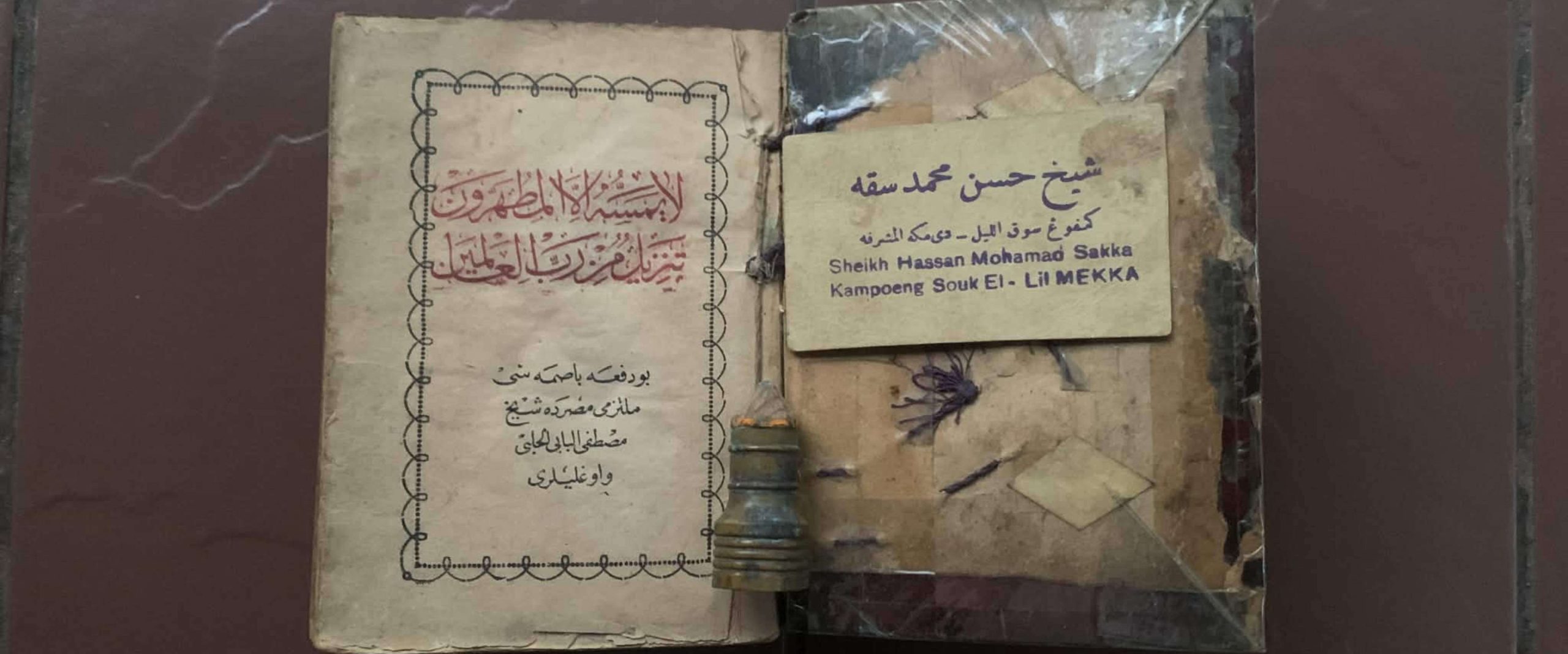
The family of Sheikh Karama Bajubair preserved a few items that survived:
-
an old Mushaf with a business card tucked inside (with English and Arabic text)
-
and a pencil said to have belonged to Sheikh Karama
These small objects became anchors—proof, comfort, and continuity.
When written archives fail, sometimes a pencil becomes history.
Why Sheikh Karama Bajubair is still remembered
So what does the story of Sheikh Karama Bajubair ultimately tell us?
It tells us Basilan was never isolated. It was part of maritime networks spanning Yemen, Malaysia, Indonesia, and the Sulu archipelago.
It tells us Islam in Basilan did not stand still. It evolved—from blended practices toward more orthodox teaching, from private dawah to local scholarship, and eventually to institutional madrasa education.
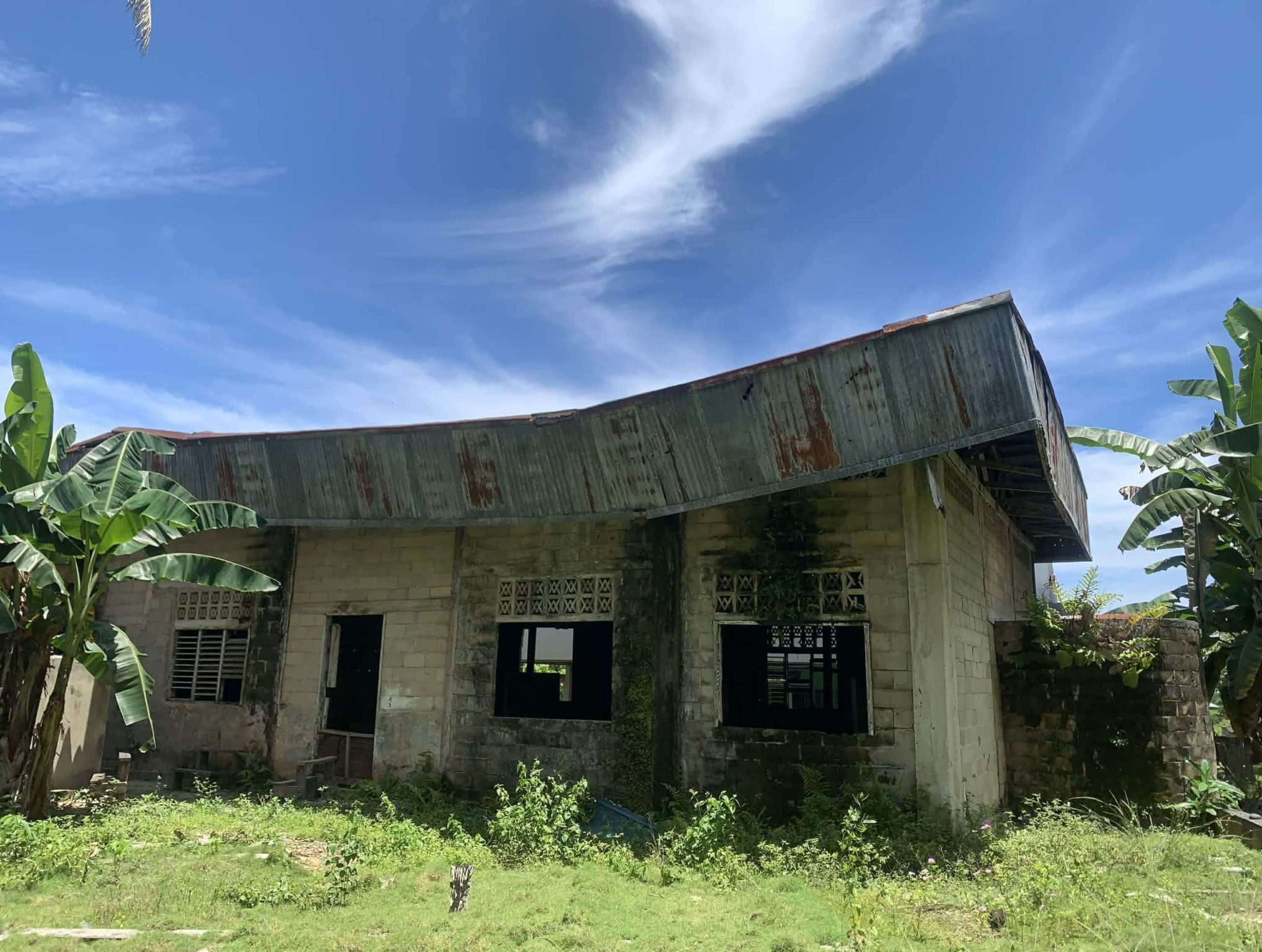
*Note: This was the oldest recorded Masjid in Amaloy and later on turned into Madrasa due to some reasons agreed by the family of Sheikh Karama Bajubair.
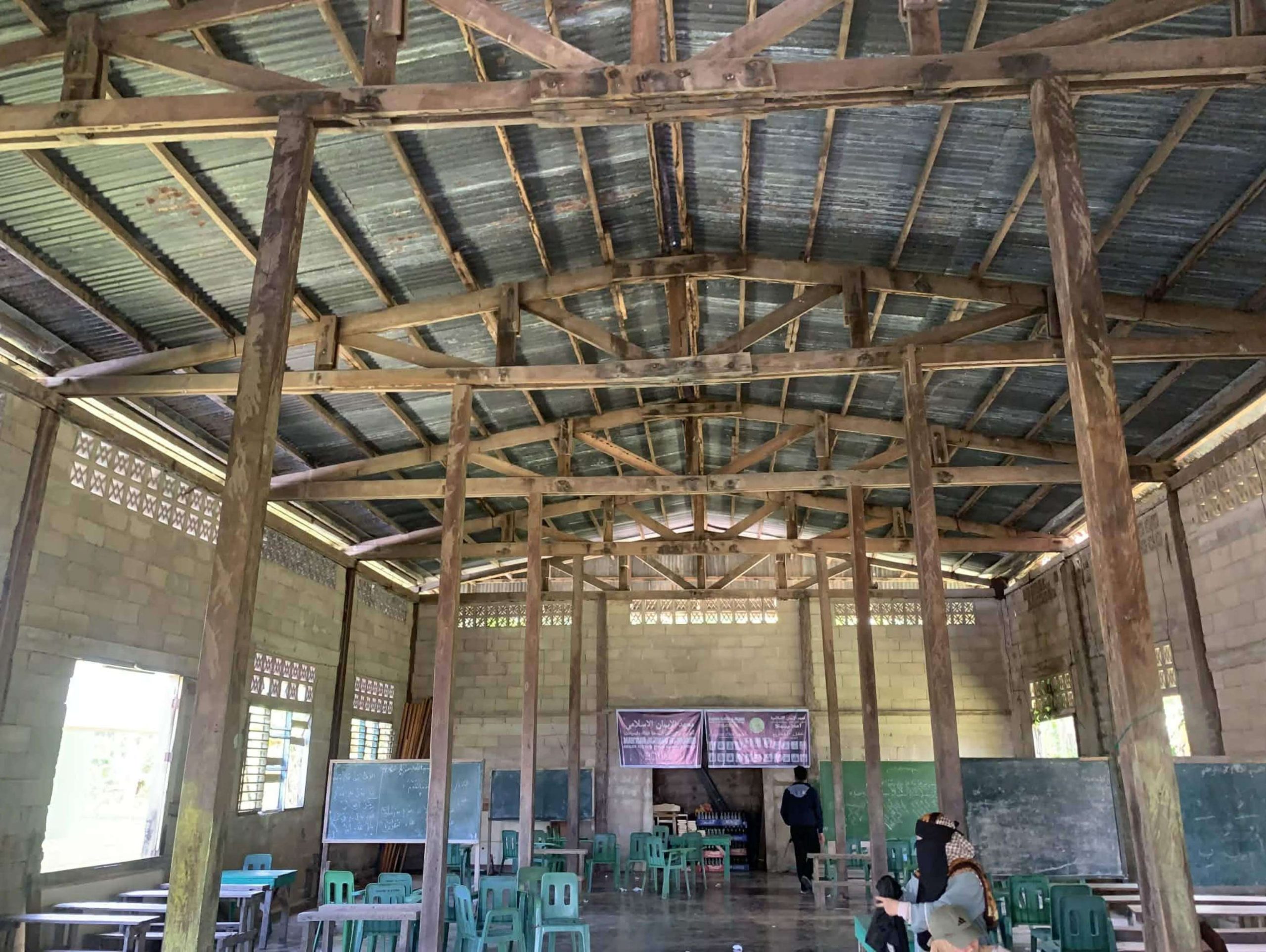
*Note: Interior of the oldest recorded Masjid. Most of the wooden part of the Masjid are still the original wood during the earlier construction.
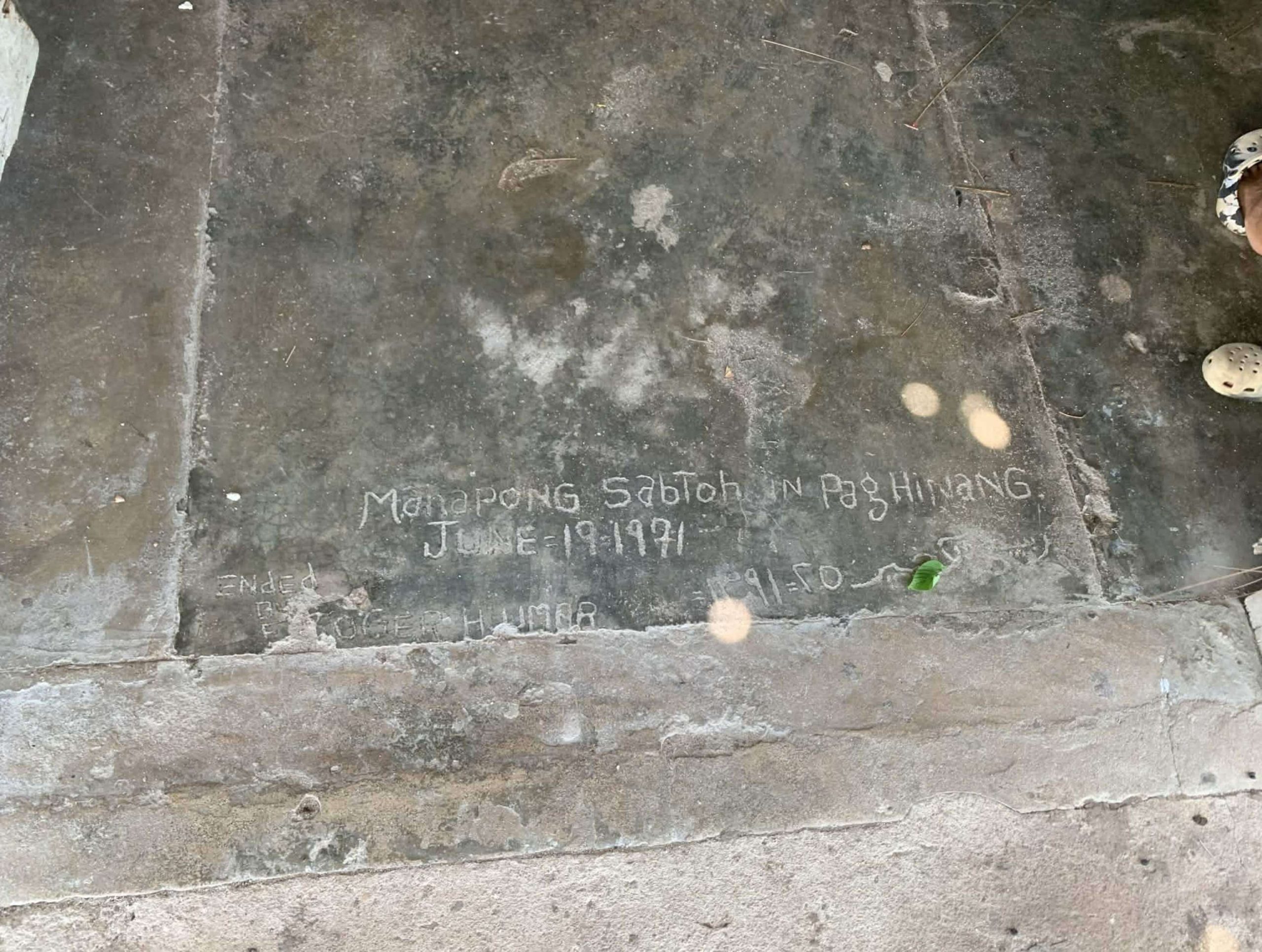
*Note: According to the elder in the community, this cement portion was made on the later part of the development of the Masjid dated on June 19,1971 in the afternoon.
It tells us legacy is not only what someone does in life—but what communities continue after them. Sheikh Karama’s reform did not end at his grave. It continued through his disciple Sheikh Adjack, through the early locally trained scholars, through later leaders who brought madrasa education, and through descendants who kept the stories alive even after displacement and loss.
And it tells us something else: that oral history is not secondary history. In places like Amaloy, oral history is the archive.
May Allah grant Sheikh Karama Bajubair, his companions, his disciples, and every forgotten name in this chain of memory the highest reward—and may Basilan continue to reclaim and record the histories that have long lived quietly in the hearts of its people.
Visit more Historical and Cultural places at Moro Memoirs website.
References
Sheikh Abdulfattah Indawi – Source from ICA SULU. Link: https://web.facebook.com/photo?fbid=138188682009125&set=pcb.138188805342446
Britannica (N.D.). Hadhramaut. https://www.britannica.com/place/Hadhramaut
Buenconsejo, J. S. (2023). On the Parity and the Act of Recognition between Magellan and Humabon in 1521. The Quincentennial Commemoration in the Philippines, Vol. 2. National Historical Commission of the Philippines. pp.1-40.
Donoso I. (2023). Islamic Mission in the Philippines in the Early Modern Era. The Quincentennial Commemoration in the Philippines, Vol. 2. National Historical Commission of the Philippines. pp.201-218.
Fernandez de Quiros P. (1986). Descubrimiento de las regiones austriales, edited by Roberto Ferrando. Madrid: Historia 16, 1986.
Gamas J.H.D, Limba M.L, Villa A.V., Balo J.C., Cunanan M.J.P., Gloria H.K., and Belenno III R.B. (2024). Mindanao Muslim History: Documentary Source from the Advent of Islam to the 1800s. Ateneo de Davao University.
Janesick, V. J. (2010). Oral history for the qualitative researcher: Choreographing the story. Guilford Press.
Meuleman, Johan H. (20o5). “The History of Islam in Southeast Asia: Some Questions and Debates,” in K.S. Nathan and Mohammad Hashim Kamali (eds.), Islam in Southeast Asia. Political, Social, and Strategic Challenges for the 21st Century. (Singapore: Institute of Southeast Asian Studies, 2005), 22-44.
Ritchie (2014). Doing Oral History by Donald A. Ritchie. ISBN: 9780199395194. Publication Date: 2014-10-17.
Sommer & Quinlan (2018). Oral History Manual by Barbara W. Sommer and Mary Kay Quinlan. ISBN: 9781442270787. Publication Date: 2018-07-15
Yow (2014). Recording Oral History by Valerie Raleigh Yow. ISBN: 9780759122666. Publication Date: 2014-12-11
AUDIO RECORDING
Interview 1: Family of Sheikh Karama Bajubair – https://youtu.be/8vMx16TgWNk